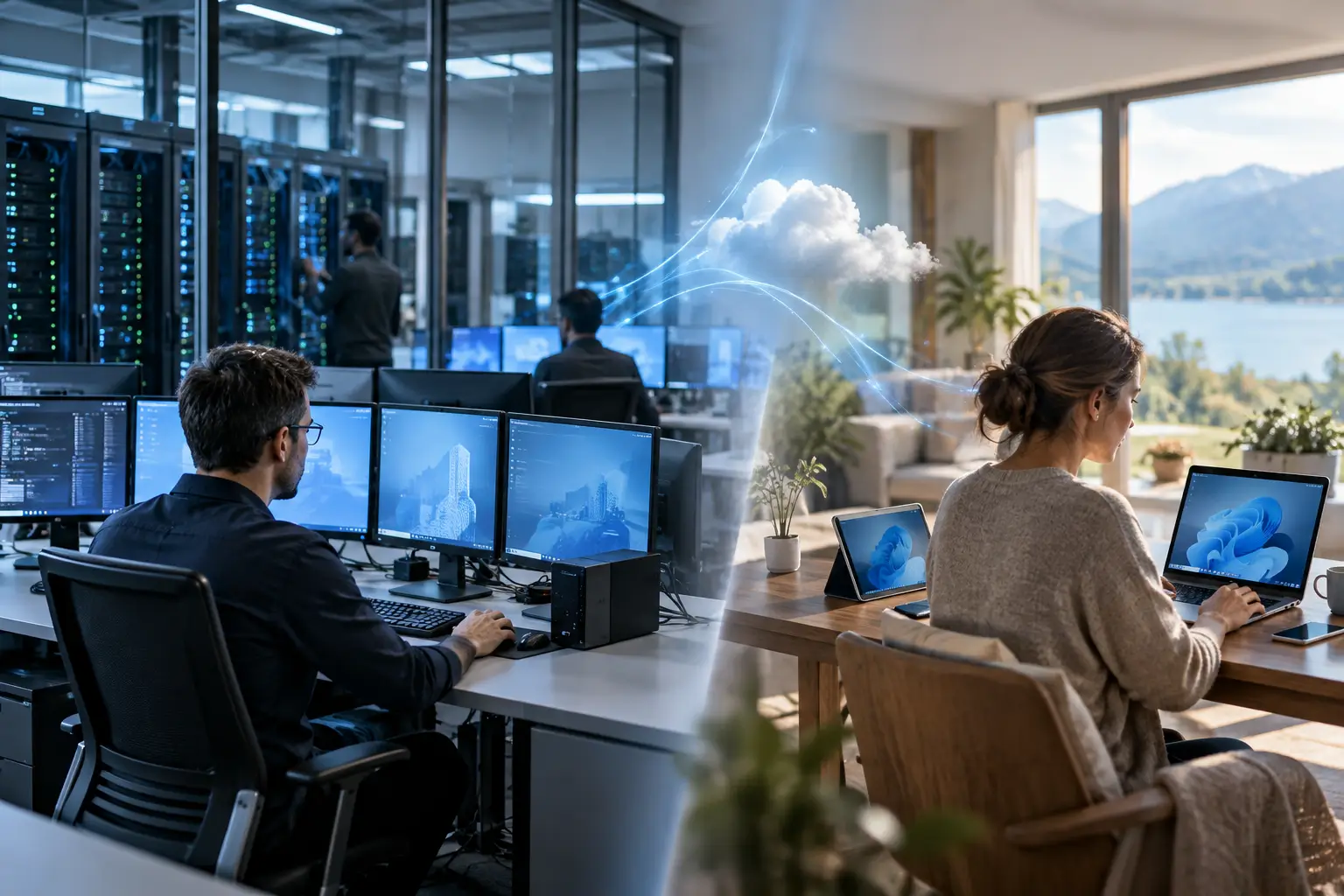
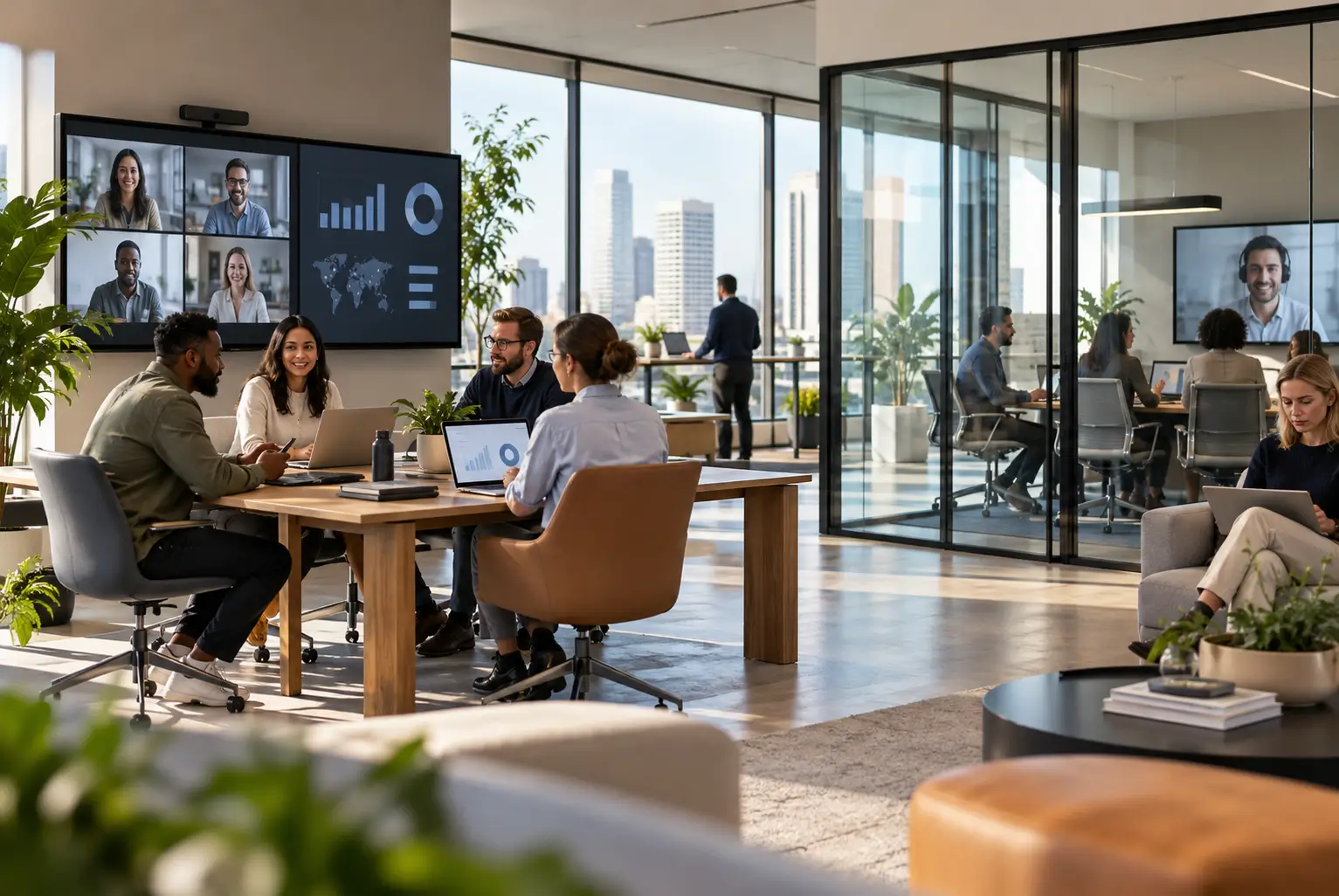
The way people work has changed permanently, but many organizations still run on tools and assumptions designed for a building everyone shared. That gap, between how work happens and how IT is set up to support it, is where frustration, security risk and lost productivity collect. The modern workplace is the deliberate response to that gap.
A modern workplace is an approach to IT that gives employees secure, reliable access to the tools, data and collaboration they need from anywhere, on managed devices, under consistent security and identity controls. It is less a single product than a connected environment. For IT leaders, understanding what it means, and what it does not, is the first step to building one that fits the business rather than chasing trends.
What a modern workplace actually means
At its simplest, a modern workplace brings together four things: cloud-based productivity and collaboration tools, managed and secured devices, strong identity and access controls, and the support model that keeps it all running. The goal is a consistent, secure experience whether someone is in an office, at home, or in the field.
It replaces a older model in which applications lived on individual PCs, files sat on local servers, and security depended largely on being inside the corporate network. In a modern workplace, identity becomes the primary security boundary, data lives in governed cloud services, and devices are managed centrally regardless of where they physically are.
Why businesses should care
The modern workplace matters because it directly affects three things every leader cares about: productivity, security and cost.
Productive employees need tools that work the same way everywhere and do not fight them. Security teams need control that does not depend on everyone being in one building. And finance needs predictable, right-sized spending rather than a sprawl of overlapping tools and aging hardware. A well-designed modern workplace addresses all three at once.
There is also a talent dimension. Flexible, well-supported digital work is now an expectation for many roles, and the quality of an organization’s workplace technology shapes how it attracts and retains people.
Common business problems it solves
- Inconsistent experience across locations. People working remotely or in the field get the same secure access as those in the office.
- Security gaps from remote work. Identity-based controls and managed devices close the holes that opened when work left the building.
- Tool sprawl and shadow IT. A consolidated platform reduces the pile of disconnected apps people adopt on their own.
- Slow onboarding and offboarding. Central identity and device management make it fast to grant, and revoke, access.
- Aging, unmanaged hardware. Centralized device management keeps machines patched, compliant and supportable.
The pillars of a modern workplace
Most modern workplace programs rest on the same foundations, whichever vendor ecosystem an organization chooses.
Productivity and collaboration
Cloud platforms such as Microsoft 365 or Google Workspace provide email, documents, chat, meetings and file storage that work across devices and locations.
Identity and access
A central identity system verifies who users are and controls what they can reach, typically with single sign-on and multi-factor authentication. Identity is the backbone of modern workplace security.
Device management
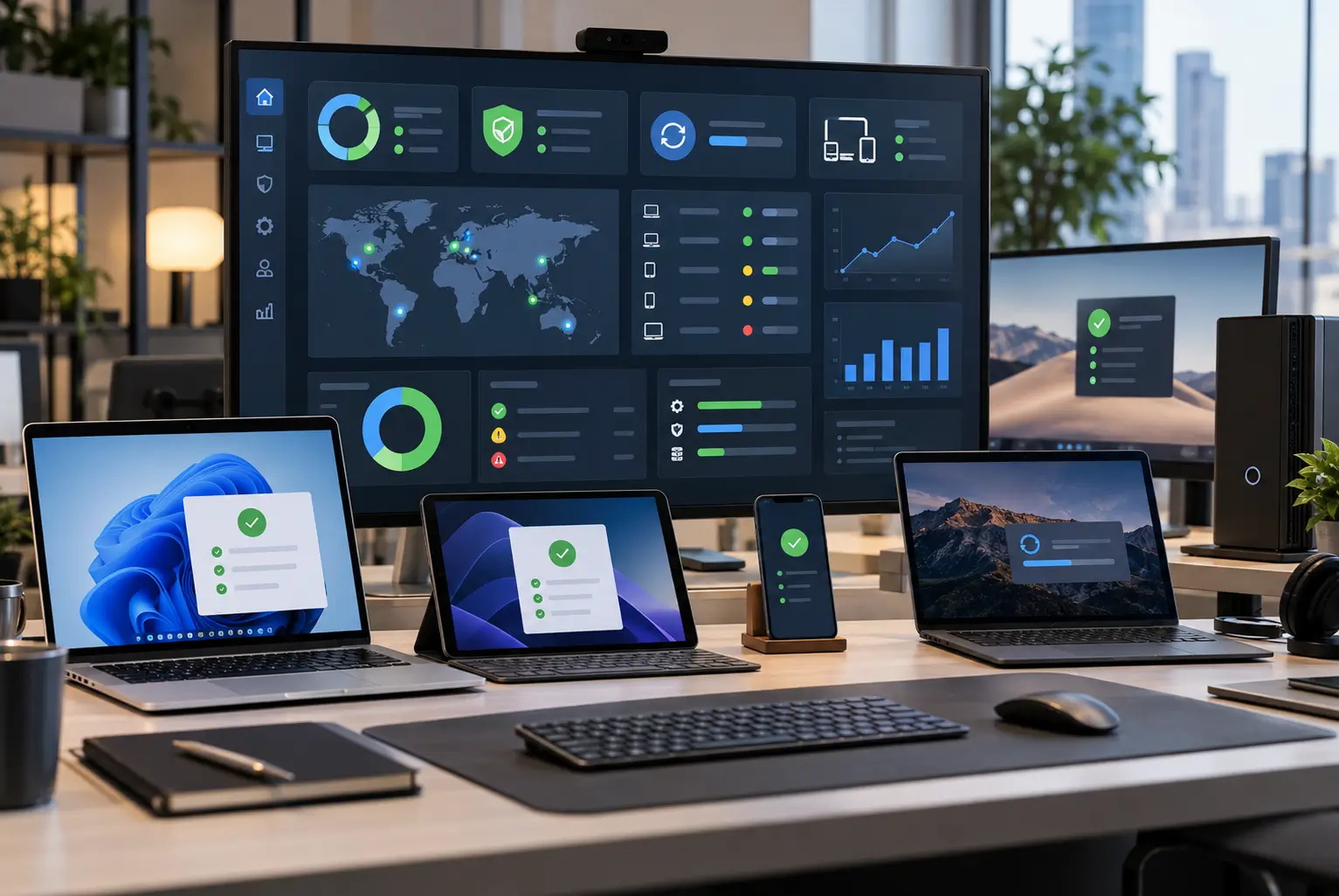
Unified endpoint management keeps laptops, desktops and mobile devices configured, secured, updated and compliant, wherever they are.
Security and compliance
Data protection, threat defense and policy enforcement run across the environment rather than at a single network perimeter.
Support and experience
A service desk and endpoint analytics keep the environment healthy and measure the actual employee experience, not just whether servers are up.
Where it fits, and where to be careful
A modern workplace fits almost any organization with knowledge workers, hybrid or remote staff, or a need to standardize and secure how people work. The benefits are strongest where work is already digital and distributed.
It is not a reason to abandon judgment. Highly specialized environments, a manufacturing floor, a clinical setting, a secure facility, have requirements that a generic rollout will not meet, and need designs tuned to them. And moving too fast, without addressing identity, data governance and change management first, trades old problems for new ones. The platform is an enabler, not a guarantee.
Common mistakes IT leaders make
- Treating it as a licensing purchase. Buying the suite is not the same as designing the environment, security and adoption around it.
- Neglecting identity first. Everything else depends on getting identity and access right; it should come early, not late.
- Skipping change management. Technology that people do not adopt delivers no value. The human side is not optional.
- Ignoring the experience. If the new environment is slower or more confusing than the old one, people route around it.
- Underinvesting in device management. Unmanaged endpoints undermine the whole security model.
How to evaluate your readiness
Before committing to a program, assess where you stand across the pillars. A few honest questions:
- Do we have a single, well-managed identity for every user, with multi-factor authentication?
- Are our devices centrally managed, patched and compliant, or unknown?
- Where does our data actually live, and is it governed?
- Can people work securely from anywhere today, or only inside the office?
- Do we measure the employee technology experience, or only infrastructure uptime?
The gaps those questions reveal become the priorities for your roadmap.
A practical next step
Building a modern workplace is a phased journey, not a single project. A sensible sequence is to establish strong identity and access first, bring devices under management, consolidate onto a cloud productivity platform, layer in security and compliance, and then continuously improve based on real experience data. Each phase should deliver visible value on its own.
Done well, a modern workplace gives people tools that simply work, gives security teams consistent control, and gives leadership a predictable, scalable foundation for how the organization works. For organizations evaluating a modern workplace environment, Billow LLC can help assess the current state, identify practical priorities and develop a roadmap aligned with business and security requirements.
Frequently asked questions
What is the difference between a modern workplace and a digital workplace?
The terms are often used interchangeably. ‘Digital workplace’ tends to emphasize the overall employee digital experience, while ‘modern workplace’ usually refers to the specific IT foundation, cloud productivity, managed devices, identity and security, that makes that experience possible and secure.
Is a modern workplace only about Microsoft 365?
No. Microsoft 365 is a common foundation, but a modern workplace can be built on Google Workspace or a mix of platforms. The concept is about the connected environment, productivity, identity, device management and security, not a single product.
Does a modern workplace improve security or weaken it?
Done properly, it improves security. By making identity the primary control and bringing all devices under management, it closes the gaps that remote and hybrid work created. The risk comes from rolling out tools without the identity, device and governance controls underneath them.
How long does it take to implement a modern workplace?
It is a phased journey rather than a fixed project. Early foundations like identity and device management can be established in weeks to months, while full maturity unfolds over a sequenced roadmap. Each phase should deliver value on its own.
What is the first step toward a modern workplace?
Start with identity and access management, a single, well-managed identity for every user with multi-factor authentication. Nearly every other element of a modern workplace depends on getting identity right first.