

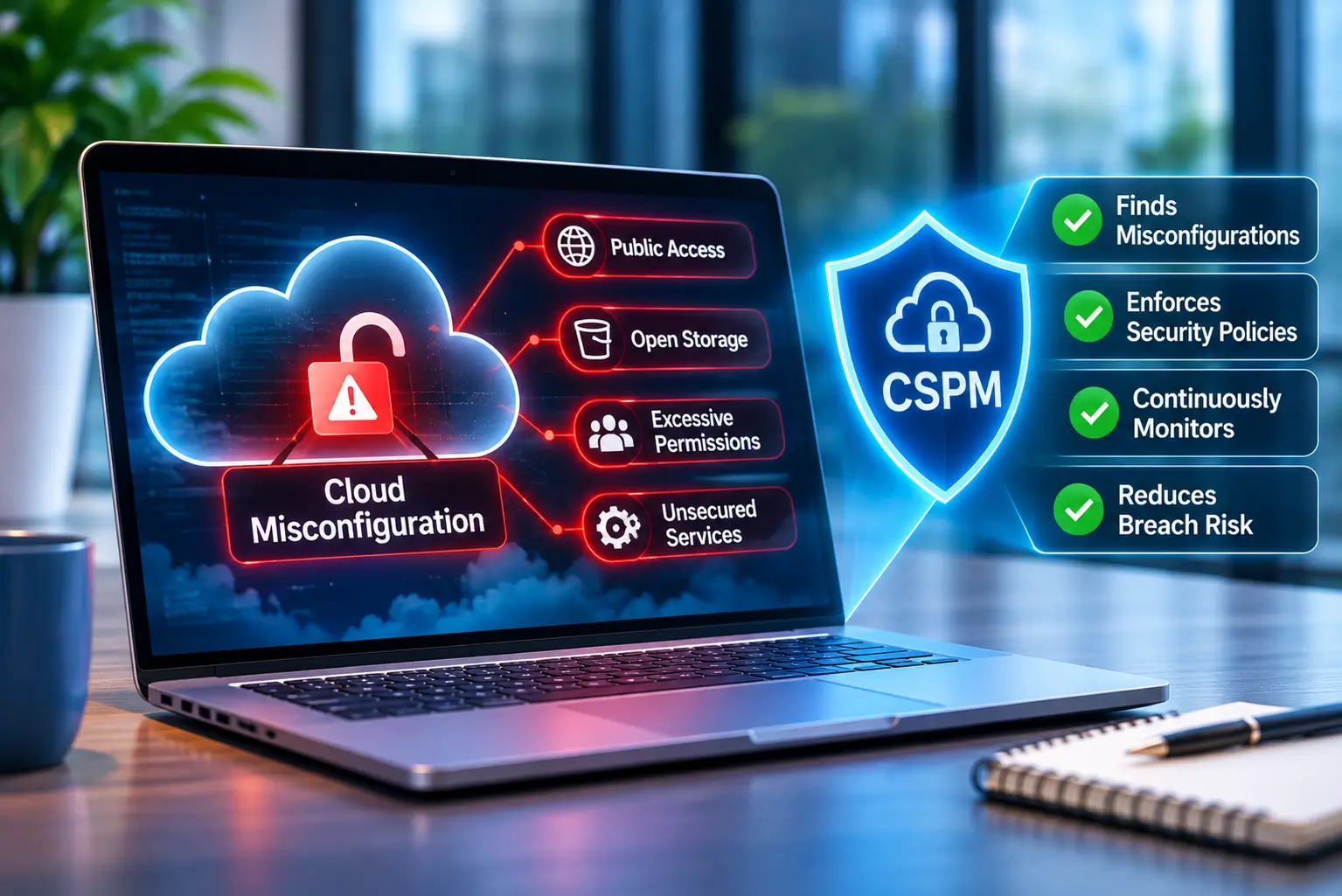
Cloud misconfigurations, such as public storage buckets, over-permissive access and disabled logging, are the leading cause of cloud data breaches. They happen because cloud environments change fast and default settings are not always safe. Cloud security posture management (CSPM) continuously scans your cloud for misconfigurations and compliance gaps and helps you fix them before attackers find them.
Why cloud misconfigurations cause breaches
Cloud providers secure the infrastructure; you secure what you run on it. That split is the shared responsibility model, and it is where many breaches begin. A single setting, a storage bucket left public, a role with far too many permissions, a database exposed to the internet, can expose large volumes of data instantly. Because cloud changes constantly and defaults are not always safe, these mistakes are easy to make and easy to miss.
The result is that misconfiguration, not a hacked data center, is behind the majority of cloud data exposures. The attacker does not need to break in when a door is left open.
The most common cloud misconfigurations
- Public storage buckets or blobs exposing data to the internet
- Over-permissive IAM roles and access keys that grant far more than needed
- Security groups or firewalls left open to the world (for example, management ports)
- Logging and monitoring disabled, so activity goes unseen
- Missing multi-factor authentication on privileged accounts
- Unencrypted data at rest or in transit
- Default credentials and unused accounts left active
What is CSPM?
Cloud security posture management (CSPM) is tooling that continuously inspects your cloud environment for misconfigurations, risky settings and compliance gaps, across one or many cloud accounts. Instead of a once-a-year audit that is out of date the next day, CSPM watches posture all the time, so new mistakes surface quickly rather than sitting exposed for months.
How CSPM helps
| CSPM does | What it means for you |
|---|---|
| Continuous scanning | Misconfigurations are found in hours, not at the next audit |
| Risk prioritization | You fix the exposures that matter most first |
| Remediation guidance | Clear steps, and sometimes automated fixes |
| Compliance mapping | Posture checked against frameworks like PCI DSS, HIPAA and CIS |
| Multi-cloud coverage | One view across AWS, Azure and Google Cloud |
Billow delivers this as part of cloud security services, including CSPM, so misconfigurations are caught and closed continuously.
Beyond CSPM: identity, data and monitoring
CSPM finds exposures; preventing them long term takes more. Least-privilege identity and access management stops over-permissive roles at the source. Information protection and governance classifies and encrypts sensitive data so exposure hurts less. And SIEM and SOAR monitoring catches the activity that follows a misconfiguration being exploited. CSPM is strongest as one layer in a zero-trust approach, not a standalone fix.
How Billow helps
Billow secures cloud environments end to end: cloud security and CSPM to find and fix misconfigurations, least-privilege identity, data protection, and monitoring through SIEM and SOAR. If you are unsure what is exposed in your cloud right now, our cybersecurity team can run a posture review.
Frequently asked questions
What is the number one cause of cloud breaches?
Misconfiguration. The majority of cloud data exposures come from customer settings, such as public storage, over-permissive access or disabled logging, rather than from the cloud provider’s infrastructure being compromised.
What is the shared responsibility model?
It is the split of security duties between you and your cloud provider. The provider secures the underlying infrastructure; you are responsible for securing what you put in the cloud, your data, identities, configurations and access. Most breaches occur on the customer side of that line.
What is CSPM in cloud security?
CSPM, cloud security posture management, is tooling that continuously scans your cloud for misconfigurations, risky settings and compliance gaps across your accounts. It surfaces exposures quickly, prioritizes them by risk, and guides remediation, rather than relying on point-in-time audits.
Does CSPM fix misconfigurations automatically?
CSPM always detects and prioritizes misconfigurations, and many platforms can also remediate common issues automatically or with one click. For sensitive changes, teams often review before applying, so detection and guidance are universal while auto-remediation is selective.
How is CSPM different from a cloud security audit?
A cloud security audit is a point-in-time assessment; it is accurate the day it is done and can drift immediately after. CSPM is continuous: it watches posture all the time, so new misconfigurations are caught as they happen rather than at the next audit.